What Is the Difference Between Home Automation and a Smart Home
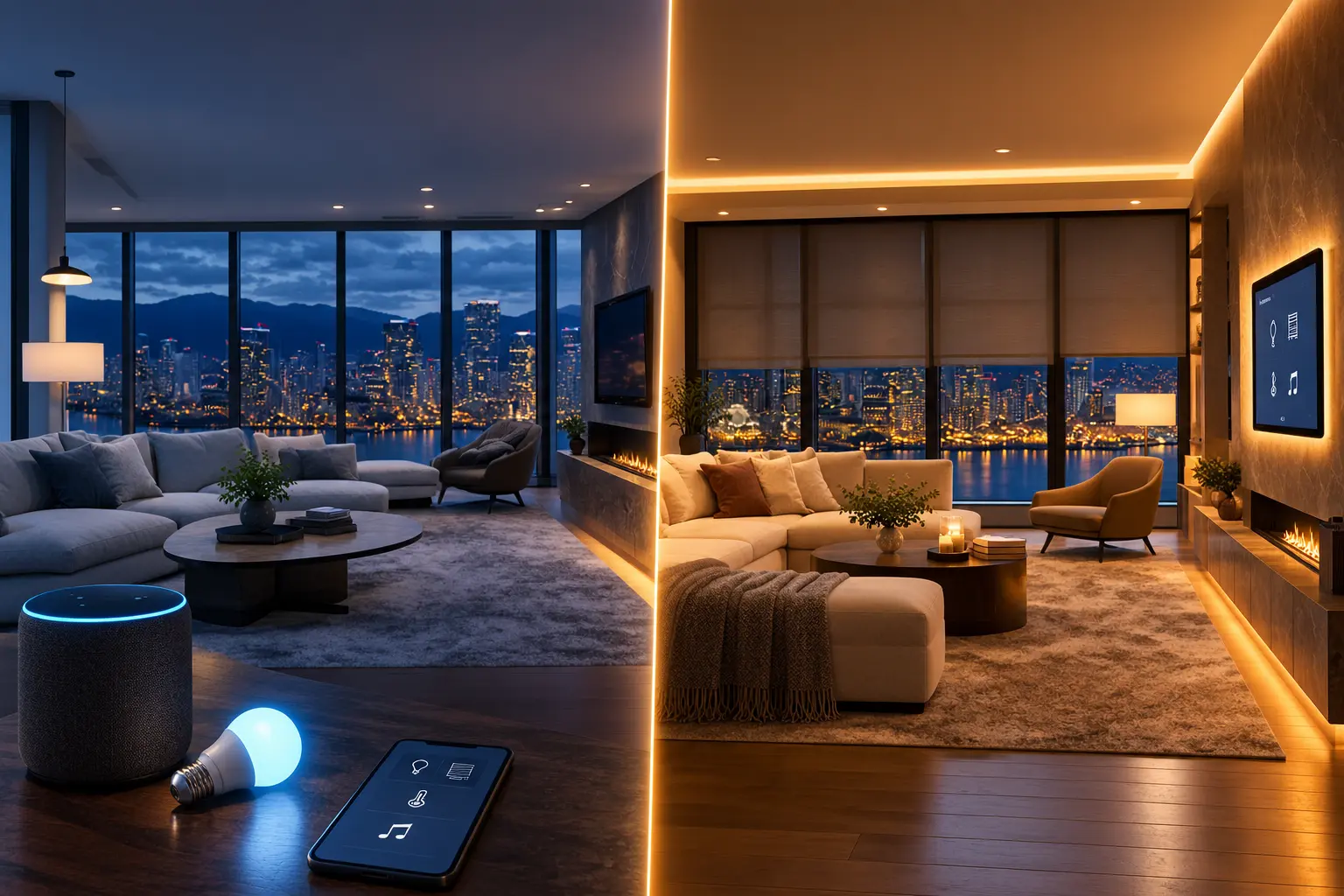
The terms “smart home” and “home automation” are often used interchangeably, but they are not exactly the same.
What Is a Smart Home?
A smart home uses connected technology to make individual devices easier to control. Examples include smart lights, thermostats, locks, cameras, speakers, TVs, and blinds.
What Is Home Automation?
Home automation focuses on coordinating multiple systems so they operate together. A Goodnight scene, for example, could turn off selected lights, close motorized shades, adjust the temperature, turn off entertainment equipment, and activate appropriate security settings.
Smart Home vs. Home Automation: What’s the Difference?
The easiest way to understand the difference is: a smart home gives you connected control; home automation gives those connected systems the ability to work together.
Which Is Better for a Vancouver Home?
There isn’t one solution that is right for everyone. Basic smart devices may be enough for some homeowners, while others may benefit from professionally designed automation covering lighting, shades, security, entertainment, and climate.
Can Smart Devices Be Integrated Into Home Automation?
In some cases, yes. Compatibility and system architecture are important. Simply purchasing multiple smart products does not guarantee reliable integration.
What Can a Home Automation System Control?
Depending on the installation, home automation can integrate lighting, motorized blinds and shades, home theatre, whole-home audio, security, cameras, climate control, access control, and entertainment.
Why Professional Integration Matters
The purpose of home automation is to simplify everyday life. Centralized controls and predefined scenes can reduce the complexity of managing multiple systems.
Home Automation Vancouver
La Scala provides customized home automation solutions designed around the property, technology requirements, and lifestyle of each client.