What Is the Difference Between Smart Home Security and Traditional Security
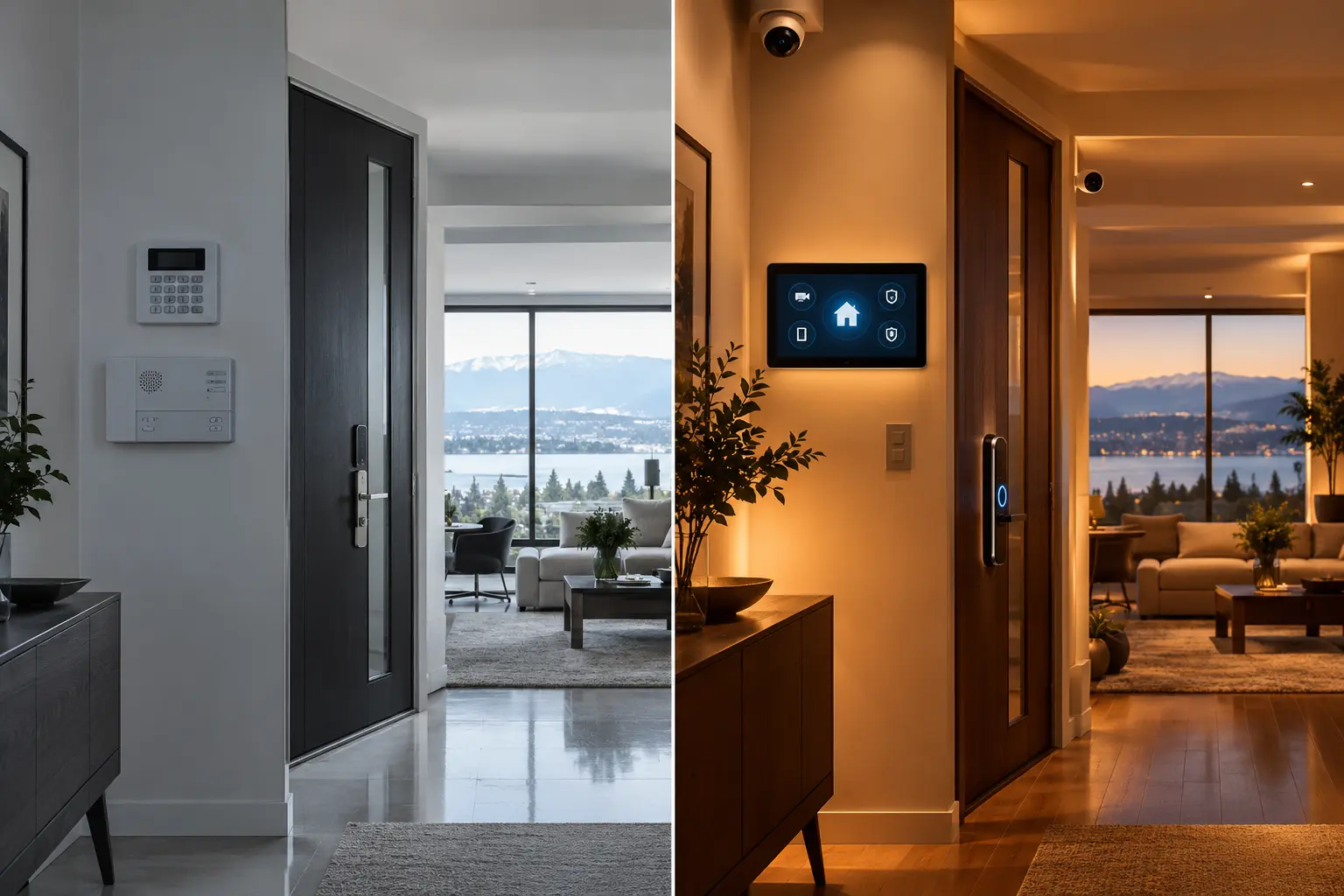
Traditional home security typically focuses on alarms, sensors, and basic protection. Smart home security adds connected technology, remote access, automation, and integration with other systems.
What Is Traditional Home Security?
Traditional systems commonly use door and window sensors, motion detectors, alarm systems, security cameras, and keypads.
What Is Smart Home Security?
Smart home security connects security equipment to a broader network, potentially including remote access, smart locks, connected cameras, video doorbells, automated lighting, integrated alarms, and access control.
Smart Home Security vs. Traditional Security
The biggest difference is integration. Traditional security can operate as a dedicated security system, while smart home security can become part of the entire home automation environment.
Can Smart Home Security Be Controlled Remotely?
Depending on the system, connected security devices can provide remote access to selected functions such as cameras, access, or other supported security features.
Can Lighting Be Integrated With Security?
Yes. Lighting can be integrated into a smart home security strategy through scenes such as Away or Welcome Home.
Is Smart Home Security Better Than Traditional Security?
Not necessarily for every homeowner. The right solution depends on the property, security requirements, lifestyle, and desired level of technology.
What Should a Smart Home Security System Include?
The ideal system depends on the property. A professionally designed solution may combine cameras, sensors, access control, locks, alarms, and automation.
Smart Home Security Vancouver
La Scala designs customized smart home security and automation solutions in Vancouver, helping homeowners create a secure and connected living environment.